 English
 Nederlands
Talentmark Celebrates 55 Years of Supporting Scientific and Medical Progress
Established in 1971, we’re celebrating 55 years of supporting scientific innovation across the life sciences and chemical industries through specialist […]

We offer services for both clients and job seekers. Make your selection above so that we can offer you the right experience.

This week’s CAR-TCR Summit Europe will focus on next-generation innovations in cell therapies and explore the challenges involved in developing and manufacturing safe, clinically effective and accessible therapies.
One of the challenges in making these new therapies a clinical reality is the length of time it takes to gain regulatory approval, something that is dependent on regulatory authorities having sufficient expertise to exercise proper oversight.
In the US, the FDA has recently received approval by Congress to fast-track access to life-threatening diseases by approving access to drugs based on test results which predict clinical outcomes. The FDA anticipates approving 10 to 20 therapies each year by 2025. Streamlining the approval process in order to meet growing demand will help the flow of investment into companies working on these therapies.
This follows on from the last year’s re-organisation of its Office of Tissues and Advanced Therapies (OTAT) into a `Super Office` within the Center of Biologics Research and Evaluation (CBER). The objective of this move is to help meet the FDA’s growing workload and new commitments as well as reducing delays. The question is whether the ‘Super Office’ for Cell and Gene Therapies will also help to streamline the cell therapy approval process?
The newly named Office of Therapeutic Products (OTP) is headed by Dr Peter Marks, who expanded on the move during a keynote address I attended at the Alliance for Regenerative Medicine’s last Meeting on the Mesa.
As one of the reasons cited for these delays are frequent changes in leadership at the FDA and human capital capability deficits, making it clear that the new office reports to Dr Marks deals with this charge.
It’s unclear how the FDA will actually put in place the predicted doubling in staff numbers to more than 400 employees. Our own experience is that people with suitable expertise are in extremely short supply. One likely approach is to recruit young PhDs doing impressive work in academia and train them up will take time. This means that although the industry hopes they will help clear the backlog of applications by 2025-26, how much of an impact the changes will have in the short term remains to be seen.
New cell and gene therapies can offer options where currently there’s no option.
Just as significantly, there is no sign at this stage that the changes will assist with the other two big issues confronting cell and gene therapies. These are the manufacturing of the therapies and their affordability.
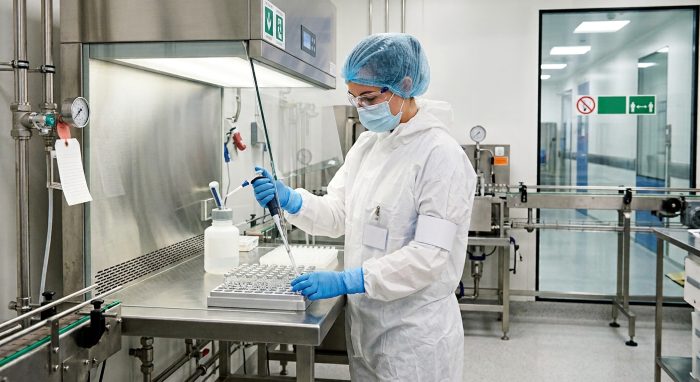
On the former, there is a need for a fundamental rethink of the approach. At the moment, although the therapies themselves are very high tech, making them is still largely a manual process involving significant time and expense. For example, a procedure which involves removing bone marrow, treating it and returning it can require samples to be flown around the world. It does not look as if establishing a `super office` will solve this problem. When it comes to cell and gene therapy, the process used for manufacturing is key because it’s all about how you manufacture the products in an effective way and then get them into the patient.
The affordability issue is related, of course. Getting a potential therapy to the stage where it might be offered to patients requires a great deal of investment. The first level of FDA approval is the Investigational New Drug Application (IND), which comes after the company has evidence from non-human tests suggesting that further research could be justified. Reaching this point typically requires two to three years of experiments and can take up to 10 years. Just as importantly, it requires tens of millions if not hundreds of millions of dollars in funding.
As a result, the path to the ultimate aim of being able to make a Biologic License Application, or request to introduce or deliver for introduction a biologic product, can be long and twisting. It’s a huge exercise requiring large amounts of paperwork covering everything from the patient experience through the safety profile to the required dosage, including certain timelines governing the process.
Falling at a particular hurdle is not necessarily a knock-out blow, but it does lead to more work and contact between the biotech company and FDA officials to ensure that the right materials are included in their dossiers, increasing the pressure on companies’ regulatory affairs departments, adding to the already considerable costs.
One encouraging sign is that the FDA reorganisation is being linked with some kind of convergence with the efforts of regulators elsewhere, such as in Europe and Japan, so that the approval process for new therapies can be streamlined without threatening patient safety.
This is obviously of benefit to all involved. Meanwhile, the very fact that the shake-up is being planned at all suggests that the FDA is listening. This is important because the sorts of gene and cell therapies coming through now offer options where currently there’s no option. These are not ‘me-too’ products, they are potential life-savers.
Established in 1971, we’re celebrating 55 years of supporting scientific innovation across the life sciences and chemical industries through specialist […]
If you work in the Life Sciences industry, you are likely to come across the term GMP quite quickly. Knowledge […]

At Talentmark, we use the tagline ‘Guiding your life in sciences’. It directly reflects the field in which we operate. […]